The return of DDT

Robert Matthews | 23 Mar 2009
The National
Is it a hoax? Is it a scam? No, it is the latest crazy idea for ridding the world of mosquitoes: zapping them with laser beams.

Last week reports emerged of a prototype device which detects the mosquito as it homes in on its human victim, and feeds information about its trajectory to a computer. In a split second, a laser beam is focused on the malevolent mozzie and - kerr-pow! - it's incinerated and falls to the ground in a puff of smoke.

It sounds like the idea of someone who has watched too many Star Wars movies. As it happens, its inventor is Dr Lowell Wood, a physicist noted for his work on America's Strategic Defense Initiative - better known as the Star Wars project. During the 1980s, while working on X-ray lasers to zap Soviet ballistic missiles, Dr Wood thought of doing something similar to mosquitoes. The idea has now taken off, following backing from the polymathic philanthropist and founder of Microsoft Research, Dr Nathan Myhrvold.

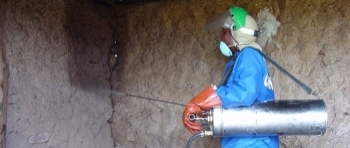
Last month Dr Myhrvold criticised the lack of vision in attempts to combat malaria, which infects 500 million people each year and kills between 1.5 and 3 million. "Our current approaches to combat the disease are low-tech: bed nets, sold or freely given; spraying or soaking bed nets in insecticide; spraying and draining water in breeding sites," he argued. "Although these approaches work, they could work better with new technology."

Whether the idea of equipping millions of Third World homes with computer-controlled laser guns really will be an improvement remains to be seen. It is sure to be a talking point at next month's meeting of the American Mosquito Control Association.

More likely, many of the old hands attending the conference will shake their heads and ponder again the disaster that befell campaigns to eradicate malaria in the 1960s, and for which millions are still paying with their lives. The fact is that scientists have had an effective technique for killing mosquitoes for 70 years, but they have been prevented from fully exploiting it by campaigners determined to make us all fearful of the P-word: pesticides.

The origins of this phobia lie in the very first eco-scare, which centred on a chemical made in 1874 called dichloro-diphenyl-trichlorethane - or DDT. Its pesticidal properties were discovered in the 1930s by the Swiss chemist Paul Müller, who showed it could rapidly kill a host of pests from aphids to beetles, while being cheap to make and easy to apply.

DDT's appalling reputation today belies its wonder-chemical status during the 1940s and 1950s. Its first triumph came during the Second World War, when Allied troops entered the city of Naples in 1943. An epidemic of typhus broke out, a lethal bacterial disease carried by lice.

The entire population of the city was fumigated with DDT, which killed the lice and saved the city. This triumph of science over a microbial mass murderer was hailed as a major breakthrough, and five years later Muller was awarded the Nobel Prize for Medicine.

In 1955 DDT was put at the centre of a global plan to eliminate an even greater scourge: malaria. And by the late 1960s, this mosquito-borne disease had been completely eliminated from all developed countries, along with large areas of tropical Asia and Central America. The impact of DDT was often astonishing.

In 1947 Sri Lanka had over a million cases of malaria; in 1963, the introduction of DDT had slashed the figure to just 17 cases. In 1970, the US National Academy of Science reported that since its introduction, DDT had prevented around 500 million deaths from malaria.

Yet none of this could halt a campaign to have DDT banned because of its alleged environmental effects. The campaign had been sparked by the publication in 1962 of Silent Spring by Rachel Carson, an American marine biologist, who claimed there was a dark side to the miracle of modern pesticides - especially DDT.

Carson warned that its indiscriminate use was having a devastating effect on the ecosystem, accumulating in the food chain with disastrous consequences for birds. She also suggested that DDT was a major health risk for humans, with a possible link to cancer.

By the early 1970s, pressure groups like the US Environmental Defence Fund had succeeded in persuading governments to ban the use of DDT, both in their own countries and by aid agencies working abroad. As a result, developing nations were deprived of the single most effective weapon against malaria, resulting in millions of deaths.

Carson's claims were scientifically dubious. The supposed effect of DDT on birds had been identified by naturalists long before the chemical was introduced. As for the link to cancer in humans, no convincing evidence existed then, or now. Within the last few months, major studies by the national cancer research institutes of the US and Japan have underlined the repeatedly negative findings of previous studies of the cancer threat posed by DDT.

Fortunately, there are glimmers of hope that sense is starting to prevail over scare stories. In 2006, the World Health Organization gave DDT "a clean bill of health" for use indoors, and the US Agency for International Development announced its support for DDT spraying to combat malaria in Africa.

Carson was right to highlight the dangers of indiscriminate use of pesticides. Some of them have turned out to be toxic, and even the best lose their effectiveness over time, as the pests acquire resistance.

But in her determination to get her message across, Carson elevated potential risks to the environment above an all too real threat to human lives. Many environmentalists still do the same, ensuring that pesticides remain the route to eradicating malaria that dare not speak its name. Without a change in attitudes towards pesticides, the mosquito will continue to inflict wholesale slaughter in developing nations.

http://www.thenational.ae/article/20090323/FRONTIERS/443298540/1036/FORIEGN